Why Do Regional Slot Preferences Still Matter?
In the vast, glittering ecosystem of global iGaming, a perennial question echoes through the corridors of casino floors from Macau to Monte Carlo: why do players in different corners of the world gravitate toward such radically different slot machines? The answer is far from arbitrary. It is a complex tapestry woven from cultural heritage, regulatory frameworks, mathematical volatility preferences, and deeply ingrained psychological reward mechanisms. Understanding these nuances is not merely an academic exercise; it is a strategic imperative for operators, game developers, and affiliates aiming to capture and retain loyal audiences in distinct jurisdictions. 🎰
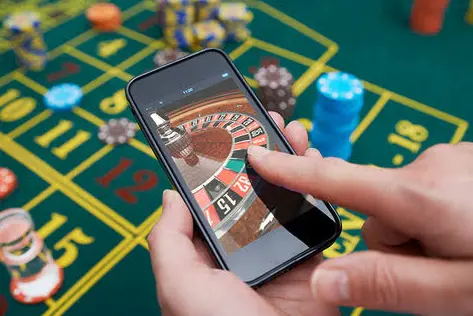
The Cultural DNA of Symbolism and Theme
At the heart of regional slot preferences lies the immutable power of cultural resonance. A slot theme that dominates the charts in Scandinavia might gather dust in Southeast Asia. Consider the Japanese market's affinity for Pachislot-style mechanics and animation rooted in anime and manga lore, a phenomenon that Western developers often underestimate. Conversely, the Latin American market demonstrates an overwhelming preference for fruit-themed classics and vibrant, fiesta-inspired visuals, echoing the cultural nostalgia of traditional land-based salones. In North America, particularly the United States, the legacy of the Las Vegas strip manifests in a preference for high-volatility, bonus-buy-heavy slots featuring recognizable licensed brands from film and television. This is not superficial; it is a manifestation of cultural conditioning and collective memory. The symbols that trigger dopamine releases are not universal—they are learned. A leprechaun resonates in Ireland, a dragon in China, and a bald eagle in the States. Developers who ignore these semiotic distinctions do so at their commercial peril.
Volatility, Hit Frequency, and the Regulatory Hand
Beyond aesthetics, the mathematical architecture of a slot game must align with regional player psychology and, crucially, local regulatory constraints. The European market, particularly the United Kingdom and Malta, has seen a regulatory push toward lower maximum stakes and reduced volatility, fostering a player base accustomed to frequent, smaller wins. In contrast, the Australian market—despite strict advertising laws—retains a legendary love for high-volatility pokies with massive jackpot potential, a relic of its pub-slot history. In Asia, the preference often skews toward games with high hit frequencies and intricate mini-game features, reflecting a cultural inclination toward calculated risk and prolonged entertainment sessions. Furthermore, jurisdictional RTP (Return to Player) requirements vary significantly. A game configured at 96% RTP for the Swedish market might be legally required to operate at a lower threshold elsewhere, directly impacting the player experience and, consequently, regional popularity. Ignoring these technical parameters is a fundamental failure of market entry strategy.
The Social Dimension and Localization Depth
Finally, the social context of play cannot be overstated. In regions where communal gambling is prevalent, such as parts of Asia and Latin America, slots are often designed with shared jackpots and tournament functionalities that foster a sense of collective participation. The solitary, hyper-individualized experience preferred in some Western markets is anathema to these players. True localization transcends mere language translation. It demands a thorough understanding of local payment ecosystems, customer support expectations, and even the specific slang used in celebratory animations. A slot that fails to acknowledge these deep-seated behavioral patterns will struggle to achieve sustainable market penetration, regardless of its graphical fidelity or mathematical fairness. The regional slot preference is, therefore, a dynamic and living entity, constantly shaped by a feedback loop of player behavior, regulatory shifts, and cultural evolution. Mastering this complexity is the hallmark of a truly authoritative force in the global gaming industry. 🎲